There are some television shows that make you question everything you know. Then there's Silo, which makes you question everything you know while sitting several hundred metres underground, surrounded by thousands of people who aren't allowed to ask questions. It's a fascinating setup, although I can't help thinking I'd last approximately three days before getting myself sent to Judicial.
And the more I think about the world of Silo, the more one question keeps bothering me: what if we've been looking at the whole thing the wrong way round?
⚠️ SPOILER WARNING
This article contains spoilers for Silo seasons 1 & 2. We're digging into major spoilers for the first two seasons of Silo, including Juliette's discoveries, the fate of Silo 17 and the revelations in the season 2 finale. We won't be using future developments from Hugh Howey's books or spoilers from later television episodes. If you're still catching up, best turn around now.
For most of season 1, we're encouraged to think of the silo as humanity's last refuge. The outside world is poisonous, the people inside are supposedly being protected, and the rules exist to keep everyone alive. Admittedly, those rules involve an alarming amount of surveillance, secrecy and the occasional disappearance, but nobody ever said surviving the apocalypse would be particularly relaxing.
By the end of season 2, however, we've discovered something far more disturbing. The outside world really is dangerous, but the people running the silos have the ability to kill everyone inside them as well.
Which brings me to my theory: the silos aren't simply protecting humanity from the outside world. They're part of a much larger system designed to decide which communities are allowed to survive.
And the most frightening thing about that system might not be the people running it. It might be that nobody currently living inside a silo has any meaningful control over their own future.
The Biggest Lie Wasn't That the Outside World Is Dangerous
One of the cleverest things Silo does is make us suspicious of absolutely everything. The screens show a dead landscape, the authorities insist going outside means death, and anyone who starts questioning the official story tends to find themselves in serious trouble. Naturally, we spend much of the first season assuming the world outside must secretly be wonderful.
Then Juliette goes outside and discovers something rather inconvenient for that theory: the landscape really is deadly.
The lush, green countryside shown inside the cleaners' helmets is a simulation. The ruined world beyond the silo is real, at least in the areas Juliette explores. So the authorities haven't been lying about everything. They've been telling the truth about the danger while lying about almost everything surrounding it.
And honestly, that's worse.
It means the system doesn't need to invent a threat to control people. It can take a genuine threat and use it to justify rules that nobody is allowed to question. If the outside world can kill you, then anyone who challenges the people keeping you inside can be portrayed as putting the entire community at risk.
It's a rather effective arrangement. The leaders can insist they're protecting everyone, and the residents have very little way of proving otherwise without risking their lives. Not exactly a society that encourages healthy debate over breakfast.
Silo 17 Changes Everything
Juliette's arrival at Silo 17 is one of those moments that completely changes how you see the story. Suddenly, we know her home isn't the only silo, and whatever happened to humanity was much bigger than a single underground community.
But Silo 17 raises an even more worrying question. If the silos were designed to keep humanity alive, why has one of them been allowed to become a graveyard?
Juliette finds the remains of a community that rebelled against its leadership, with most of its people dead and the silo itself falling apart. Through Solo, we gradually piece together what happened, and it becomes clear that the residents weren't simply victims of a broken generator or an unfortunate plumbing incident.
Their rebellion had consequences far beyond anything they understood.
What's interesting is that Silo 17's residents appear to have made a terrible mistake about the outside world. They believed they could escape their prison, only to discover that the environment beyond it was still deadly.
But the important point isn't simply that they were wrong. It's that their entire society had been built around withholding the information they needed to make an informed choice.
If you're never told why you're underground, how the system works or who makes the ultimate decisions, it's hardly surprising that people eventually stop believing anything they're told. The mystery isn't why rebellion happens. It's how the silos manage to go so long without one.
The Safeguard Is the Clue That Really Bothers Me
And then we get to the Safeguard.
For anyone who thought Silo was already fairly bleak, season 2 helpfully introduces a system capable of wiping out an entire underground population. Just in case the poisoned atmosphere, authoritarian government and near-total absence of sunlight weren't doing enough for morale.
We learn that a silo can be flooded with poison through a hidden pipe, potentially killing everyone inside. In Silo 17, Solo's memories suggest his parents tried to prevent exactly that from happening. Meanwhile, the Algorithm's threats make it clear that this isn't some forgotten emergency system nobody remembers how to use.
It's still part of the machinery controlling these communities.
Now, here's what I find especially disturbing. You don't build a mechanism capable of exterminating an entire population unless you've considered the possibility that you might want to use it. That's not a minor safety feature accidentally left in the original design. That's a deliberate decision to give someone, or something, the power to decide whether thousands of people should continue existing.
And that changes the purpose of the silos completely.
A genuine refuge would be designed to give its residents the best possible chance of surviving. But a refuge with an extermination system built into it is something else entirely. It suggests that whoever created the silos was more concerned with maintaining control over the wider system than preserving every individual community within it.
Which makes me wonder whether the residents were ever meant to be completely free.
What If the Silos Are Being Tested?
Here's where my theory goes a little further.
What if each silo is effectively part of a long-running experiment? Not necessarily an experiment to see whether people can survive underground — we've already seen that they can — but one designed to see whether a community can remain stable under very specific conditions.
Think about the rules. Residents are kept largely ignorant of the past, discouraged from asking difficult questions and governed by a rigid system that rewards obedience. Technology and knowledge are tightly controlled, while the people in charge seem to possess only selected parts of the bigger picture.
That's an extraordinary amount of effort to go to if the sole objective is keeping a few thousand people alive.
But it makes more sense if stability itself is being measured.
Imagine whoever designed the silos knew that humanity would eventually need to rebuild. Rather than simply preserve as many people as possible, perhaps they wanted to identify which communities were capable of surviving generations of isolation without collapsing into conflict.
Under that interpretation, the silos aren't just shelters. They're competing versions of a future society, each operating under conditions established by people who are long gone.
And if a silo becomes unstable enough to threaten the wider project, the Safeguard provides a rather horrifying way to remove it from the equation.
I'm not saying the series has confirmed this. It hasn't, at least through the second season. But the existence of multiple silos, the rigid social controls and the ability to eliminate an entire population make the idea difficult to dismiss.
It's basically the world's most unethical management assessment, with slightly more concrete and considerably worse consequences.
Is the Algorithm Really Running Everything?
Another detail that makes this theory interesting is the Algorithm.
Throughout the first two seasons, people like Bernard seem to be in charge. They know more than everyone else, make the important decisions and go to extraordinary lengths to maintain order. Bernard certainly behaves like someone who's never encountered an instruction he didn't think should be obeyed.
But the deeper we get into the story, the more apparent it becomes that even he doesn't understand everything.
The Algorithm has access to information that appears to sit above the authority of individual silo leaders. It can communicate directly with selected people, make decisions about access to the vault and threaten consequences when information is revealed.
That raises an uncomfortable possibility: perhaps Bernard isn't really the person running Silo 18. He's simply the person responsible for carrying out instructions from a system whose actual purpose he doesn't fully understand.
And if that's true, his position is rather tragic when you think about it. He spends his life manipulating people, suppressing information and convincing himself he's doing what's necessary to keep everyone alive, only to discover that the final decision about their survival might never have belonged to him.
We spend so much time worrying about the people at the top of the silo that we almost forget there could be another level of authority entirely.
Juliette Might Be the One Thing the System Can't Account For
This is why I think Juliette is so important to the bigger mystery. She isn't particularly interested in political power, preserving traditions or keeping everyone comfortable with the official version of events. She's an engineer. When something doesn't work, she wants to know why, and when someone tells her not to investigate, she generally takes that as a helpful suggestion about where to start.
It's a personality trait that makes her an excellent protagonist and an absolute nightmare for anyone trying to operate a secretive underground dictatorship.
Juliette survives going outside, discovers another silo and returns with knowledge that nobody in Silo 18 was supposed to possess. By the end of season 2, she understands enough about the Safeguard to believe there might be a way to stop it.
That matters because it suggests the system isn't invincible. It may have been designed to control information and prevent communities from discovering the truth, but it still relies on physical machinery, infrastructure and people who can make mistakes.
And Juliette is rather good at finding mistakes.
My suspicion is that the greatest threat she poses isn't simply exposing the lies. It's demonstrating that the residents might be able to survive without the people, or the intelligence, currently deciding their fate.
If she can work out how to disable the Safeguard, she wouldn't just be saving her friends. She'd be removing one of the most powerful tools the system has for keeping everyone obedient.
For a society built around the principle that questioning authority will get you killed, that's a pretty significant development.
So What Is the Real Purpose of the Silos?
Here's my prediction.
I think the silos were designed to preserve humanity, but only under conditions set by a central authority that can eliminate communities it considers a threat to the overall project.
The deadly outside environment provides a genuine reason to remain underground, but it also gives the system an almost perfect means of control. Residents cannot easily leave, cannot communicate freely with other silos and cannot discover the truth without breaking rules that have been treated as essential to survival.
Meanwhile, the Safeguard means even successful rebellion may not lead to freedom. A community could overthrow its leadership, take control of its own silo and still be destroyed by a decision made somewhere else.
That's why I don't think the central mystery is simply whether the world outside will eventually become safe. The more interesting question is whether the people inside will ever be considered trustworthy enough to decide their own future.
And perhaps that's the real purpose of all the secrecy. The residents aren't being prepared to rebuild civilisation as equals. They're being managed until whoever controls the system decides what happens next.
Whether that decision is made by human beings, an artificial intelligence or some combination of the two is something the first two seasons leave open. But somebody created this structure, and I suspect their idea of saving humanity might be very different from Juliette's.
The Real Prison Might Be the Rules
What I love about Silo is that it keeps giving us answers that make the mystery bigger. We discovered the outside world was deadly, only to learn there were other silos. We discovered another community had collapsed, only to learn about the Safeguard. And just when we thought we understood who was running things, the Algorithm made the whole situation considerably more complicated.
But beneath all those revelations, there's a fairly simple question: what does survival actually mean if someone else controls every aspect of your life?
The residents of Silo 18 have homes, jobs, families and a functioning community. They're alive, which is more than can be said for the people who died trying to escape Silo 17. Yet they're also denied the knowledge they need to understand their world, and their continued existence may depend on decisions made by an authority they cannot challenge.
That's not exactly freedom. It's survival with terms and conditions.
I think Juliette's story is gradually moving towards a confrontation with that distinction. Saving Silo 18 will mean more than keeping everyone underground and the generator running. It'll mean giving its residents the chance to choose what happens to them, even if that means confronting truths they'd rather not hear.
Because perhaps the most frightening thing about Silo isn't that the world outside could kill you.
It's that the people inside have spent generations believing they're safe, without ever realising that someone else has the power to decide when that safety ends.
And suddenly, the outside world doesn't seem like the only place worth being afraid of.
About Silo
Silo is an Apple TV science-fiction drama based on Hugh Howey's novels. It follows Juliette Nichols, an engineer living in an enormous underground community whose residents have been taught that the outside world is deadly and their survival depends on obeying strict rules.
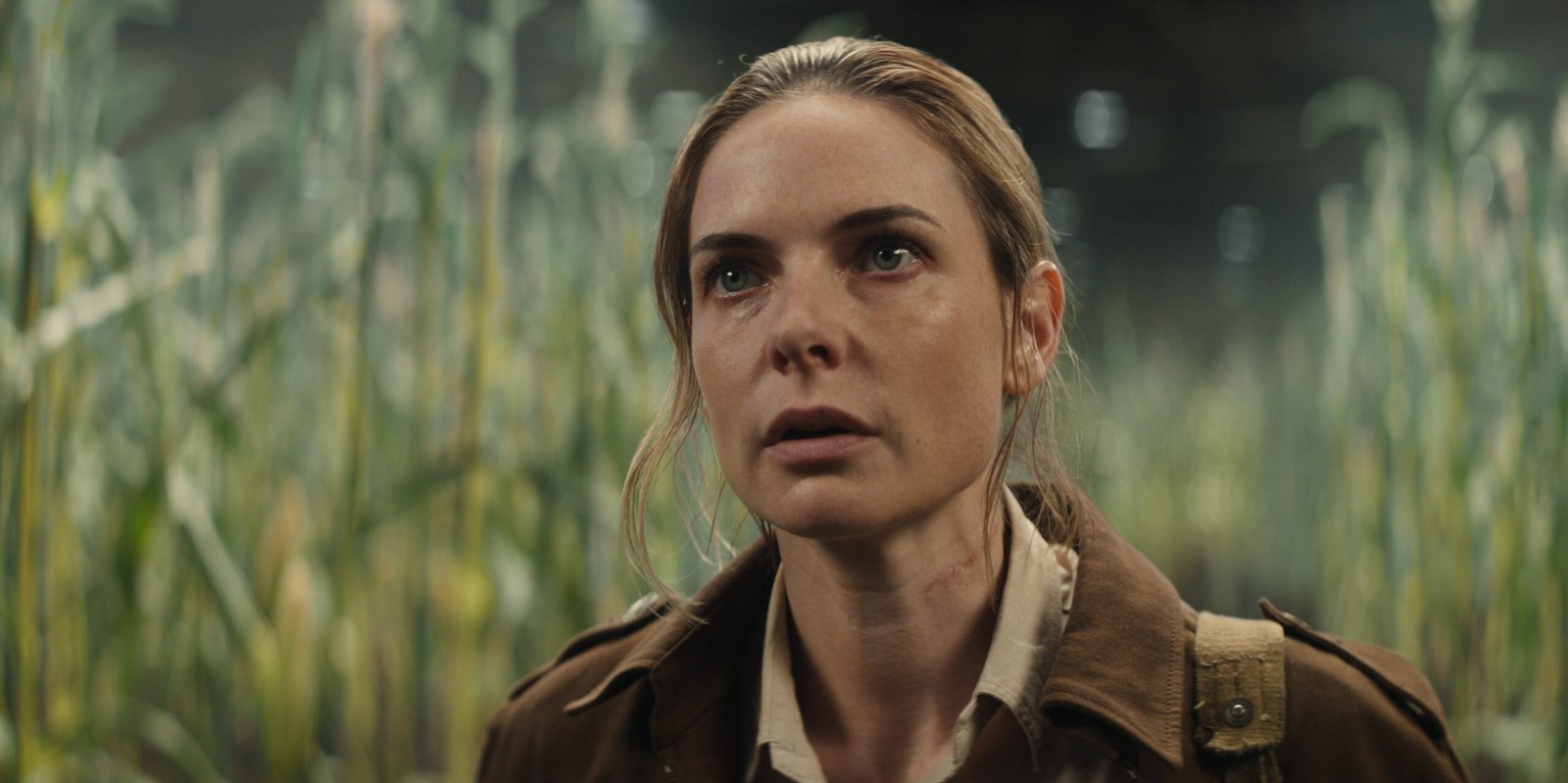
The series stars Rebecca Ferguson as Juliette Nichols, alongside Tim Robbins, Common, Harriet Walter and Steve Zahn. Developed for television by Graham Yost, Silo explores secrecy, social control and the search for truth in a society built on fear of the unknown.
This Scene It Coming theory examines the story through the end of season 2. It does not draw on plot revelations from later television episodes or the novels.